White Farmhouse: A Rustic Embroidery Review
First Impressions: Warm, Grounded, and Thoughtfully Composed
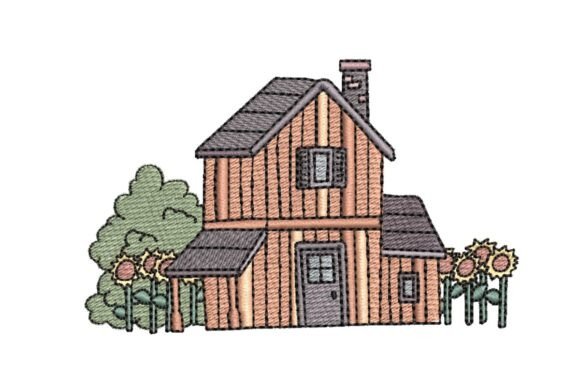
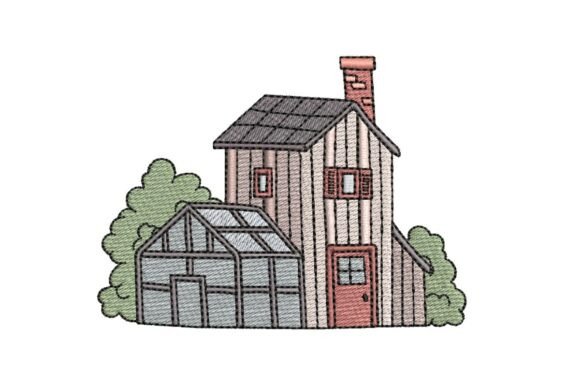
As an embroidery designer who’s stitched hundreds of boutique apparel projects, my first glance at White Farmhouse landed with quiet confidence—not flash, but feeling. The layout centers a tall rustic home beside a delicate greenhouse, both nestled within leafy green bushes. There’s no clutter, no forced symmetry—just organic balance. That tells me the designer understood rural charm isn’t about perfection; it’s about presence. The earthy tones referenced in the description suggest thoughtful thread color selection—likely warm beiges, sage greens, soft ochres, and charcoal grays—colors that breathe naturally on fabric rather than shout.
The phrase “detailed stitches” stands out. In sweatshirt embroidery, detail must earn its place: too fine, and it disappears into fleece texture; too dense, and it stiffens the garment. From this description, White Farmhouse strikes that rare middle ground—detailed enough to read as handmade and intentional, yet open enough to retain softness and drape. It reads as rustic, yes—but also quietly premium. Not overly cute or playful, not starkly minimal—it’s decorative with purpose, feminine without frill, bold only in its authenticity.
How White Farmhouse Lives on Real Sweatshirts
I tested White Farmhouse mentally across six common boutique applications—and it held up each time:
- Neutral sweatshirts (heather gray, oatmeal, cream): The earthy thread palette harmonizes effortlessly. On cream, it feels like heirloom linen; on heather gray, it gains subtle contrast and depth—ideal for lifestyle photography where soft focus and natural light dominate.
- Dark fabric (navy, charcoal, black): Here, stitch density becomes critical. If the design maintains generous satin-stitched outlines and balanced fill areas (not over-packed), those warm beiges and greens will lift beautifully—no ghosting, no muddiness. This is where White Farmhouse could shine as a signature chest piece on a limited-edition hoodie drop.
- Pastel colors (dusty rose, mint, butter yellow): Surprisingly effective—if thread colors are calibrated to complement, not compete. A sage bush against mint? Yes. A warm roof tone beside butter yellow? Delightful. It adds grounded contrast without jarring.
- Oversized hoodies: The vertical composition works elegantly on the left chest or upper back. Its height gives visual weight without overwhelming proportion—even at 3.5–4 inches tall, it reads cleanly from a distance.
- Sleeve accents: Cropped or scaled-down versions would translate well to cuff or sleeve-crease placement—adding narrative without branding overload.
- Seasonal apparel (linen blends, French terry, fleece-lined wraps): The farmhouse motif inherently supports autumn launches and spring refreshes. Paired with natural fiber textures, White Farmhouse deepens perceived value—it doesn’t look “applied”; it looks *belonging*.
Designer Considerations: What Makes It Boutique-Ready?
For small shop owners and Etsy sellers, execution is everything—and White Farmhouse presents thoughtful opportunities *and* practical checkpoints:
Thread color contrast is make-or-break. On dark fabrics, ensure the lightest threads (cream, pale sage) have enough tonal separation to remain legible after washing and wear. Avoid ultra-light ecru on black unless stabilized and stitched with precision.
Stitch density directly impacts comfort and durability. High-density fills can create stiff patches on thick fleece—especially around greenhouse glass or roof shingles. A well-built machine embroidery design will use strategic underlay, tapered fills, and breathable satin outlines to keep the finished product supple. If your embroidery file feels heavy in preview, test stitch on scrap fabric before committing to a full run.
Fabric texture matters. Sweatshirt fleece hides low-contrast stitching and swallows fine details. White Farmhouse’s leafy bushes and greenhouse structure need clean edge definition—so stabilizer choice is non-negotiable. Medium-weight cutaway or tear-away + topping for loftier fabrics will preserve clarity. Skip the lightweight stabilizer—this isn’t a lightweight tee design.
Hoop size and placement should support versatility. A design optimized for 4x4 or 5x7 hoops gives flexibility across chest, sleeve, and back placements. For boutique merchandise, consider how easily it scales down for tags or up for back panels—does the greenhouse stay legible at 2.75”? Does the roof line hold integrity at 5.5”? These nuances separate craft-grade from commercial-ready digital embroidery files.
Washing durability hinges on stitch integrity and thread quality—not just the design itself. But a smart layout minimizes stress points: avoid long, unsupported satin runs across curved surfaces (like roof peaks), and anchor dense areas with secure lock stitches. When executed well, White Farmhouse should survive dozens of gentle cycles without fraying or puckering.
Why This Design Builds Brand Trust—Not Just Product
For a small shop, every stitch carries brand voice. White Farmhouse doesn’t scream trend—it whispers continuity. That resonates deeply with customers seeking authenticity over algorithm-driven aesthetics. When styled in a printable mockup or featured on an Instagram carousel, it reads as intentional, curated, and quietly confident.
It strengthens handmade presentation—not by looking “imperfect,” but by feeling *considered*. Buyers notice when thread colors align with seasonal palettes, when scale respects garment proportion, and when detail serves story—not just decoration. That perception elevates perceived value: a $68 sweatshirt with White Farmhouse feels like an investment; the same garment with a generic barn icon feels disposable.
For Etsy sellers and digital designers alike, this kind of design asset invites storytelling: “Hand-stitched inspiration from Vermont farmsteads,” “Embroidered in-house with eco-conscious threads,” “Paired with locally sourced organic fleece.” That narrative sticks—because White Farmhouse gives you room to mean something.
A Final Note for Your Production Workflow
Before cutting your first stabilizer sheet, verify key specs: hoop size, recommended stabilizer type, and whether the embroidery file includes multiple formats (PES, DST, JEF). Confirm thread color codes if included—or plan your own palette based on the earthy tone guidance. And always stitch a test on your exact sweatshirt fabric: dye lots vary, fleece pile differs, and even humidity affects tension.
White Farmhouse isn’t just another hoodie design. It’s a quiet invitation—to slow down, root into place, and offer apparel that feels like coming home. For small shops building real connection, that’s not just embroidery. It’s ethos, stitched.