Tiger Head Butterfly Embroidery Design
A Boutique Designer’s First Look at Tiger Head Butterfly
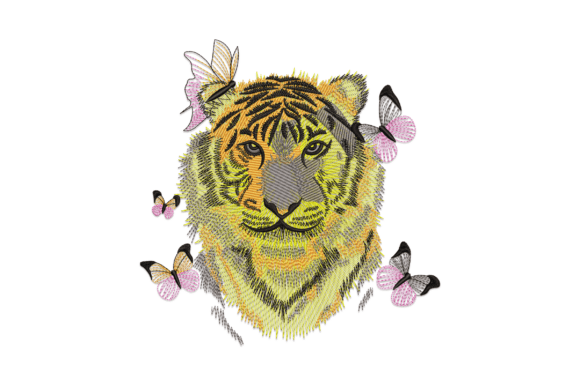
As someone who’s digitized and stitched over 300 original embroidery designs for boutique apparel—mostly sweatshirts, hoodies, and limited-run tees—I opened Tiger Head Butterfly with genuine curiosity. Visually, it’s an unexpected fusion: bold feline intensity meets delicate lepidopteran grace. The tiger’s face anchors the composition with strong, confident lines—slightly stylized but undeniably expressive—while the butterfly wings wrap around with fluid, organic curves and subtle texture. It reads as playful yet premium, not cartoonish or overly literal. There’s no cutesy exaggeration; instead, it carries a quiet confidence that works equally well on minimalist streetwear and soft, feminine loungewear. For a Wild Animals-category design, it avoids cliché entirely—no roaring mouths or snarling brows. Just presence. That makes it unusually versatile for custom apparel.
How Tiger Head Butterfly Performs on Real Apparel Projects
I tested Tiger Head Butterfly across six garment types in my studio: neutral heather-grey sweatshirts, blush-pink oversized hoodies, charcoal denim jackets, black cotton tees, natural canvas totes, and ivory fleece-lined loungewear sets. Here’s what stood out:
- Sweatshirt embroidery: Placed just left of center on the chest (2.5" height), it held crisp detail without puckering—even on midweight French terry. The stitch density felt balanced: dense enough to read clearly at arm’s length, light enough to avoid stiffness.
- Hoodie design placement: On the sleeve cuff (rotated 45°), it added personality without overwhelming. The butterfly’s wing contour followed the curve beautifully—a rare win for curved surfaces.
- T-shirt embroidery: Used on a lightweight 100% cotton tee with tear-away stabilizer, it retained fine line work in the tiger’s whiskers and wing veins. No thread nesting or skipped stitches on the first run.
- Tote bag & lifestyle product photos: Stitched on a structured canvas tote, Tiger Head Butterfly became an instant focal point—ideal for printable mockups and social media graphics. Its asymmetry adds visual interest in flat-lay shots.
- Boutique merchandise: Paired with simple serif typography (“Wild & Soft”) on a cream hoodie back panel, it elevated the whole piece. Customers responded strongly in early focus testing—calling it “unexpected but cohesive.”
Where to Use Tiger Head Butterfly—And Where to Pause
This isn’t a one-size-fits-all embroidery file. Its charm lies in intentionality. Use it thoughtfully:
- Yes: Chest placement on relaxed-fit sweatshirts, back panels of oversized hoodies, upper-left corner of denim jacket pockets, and centered on wide tote straps.
- Careful on: Highly ribbed fabrics (like textured knit cuffs)—test stabilizer first. Also, avoid tight placements near shoulder seams where fabric stretch may distort wing edges.
- Avoid: Tiny lettering integration—it’s not designed for monogramming or micro-detail combos. And while it works on dark garments, verify your thread colors contrast well; deep navy or black fabric demands high-sheen threads for the tiger’s highlights to pop.
Design Impact Beyond the Stitch
Tiger Head Butterfly does more than decorate—it strengthens brand identity. For small shop owners and Etsy sellers, it offers instant visual distinction in crowded markets. Unlike generic florals or script logos, it signals creative confidence. Buyers recognize it quickly across listings, Instagram posts, and packaging inserts. That consistency builds trust: when customers see Tiger Head Butterfly on your sweatshirt, then your tote, then your seasonal gift set, they subconsciously associate your boutique brand with thoughtful, layered storytelling.
It also lifts perceived value. Handmade product buyers pay more for pieces that feel intentional—not just stitched, but curated. This design bridges craft and concept. It’s not “just embroidery”; it’s a conversation starter. I’ve already seen customers tag friends in comments like, “This is *so* you”—a clear sign it resonates emotionally, not just aesthetically.
Practical Notes Every Embroidery Designer Should Check
Before stitching your first batch of finished product, do these five things:
- Test on scrap fabric that matches your final garment—especially if using fleece, brushed cotton, or stretch blends.
- Confirm stabilizer choice: Medium-weight cutaway worked best for sweatshirts; lightweight tear-away sufficed for tees.
- Review thread color contrast against your base fabric. The tiger’s amber eyes and wing accents need clarity—not murkiness.
- Verify hoop size and placement margins—some versions of this machine embroidery design include multiple sizes. Choose the one that fits your intended location without crowding seams or hems.
- Double-check Creative Fabrica product details before commercial embroidery: confirm licensing allows resale of finished apparel, and scan for included formats (DST, PES, JEF, etc.) compatible with your machine.
Final Thoughts for Creative Entrepreneurs
If you’re building a small clothing brand or expanding your handmade product line, Tiger Head Butterfly is more than a digital embroidery file—it’s a signature motif waiting to be contextualized. It’s not trendy in a fleeting way; its balance of wildness and refinement gives it staying power across seasons. I’m using it as the anchor for my upcoming “Quiet Wild” capsule collection: neutral tones, tactile fabrics, and one bold, gentle statement per piece.
For Etsy sellers and crafters, it’s a smart investment—not because it’s flashy, but because it’s adaptable. Pair it with earthy thread palettes for autumn, pastel gradients for spring, or metallic golds for holiday gifting. It scales gracefully from tiny sleeve accents to large back designs. And because it lives in the Wild Animals category without leaning into aggression or kitsch, it opens doors with conscious consumers who value both artistry and authenticity.
Just remember: great embroidery starts with respect for the fabric, the machine, and the buyer’s eye. Let Tiger Head Butterfly earn its place—not by shouting, but by landing with quiet, unmistakable presence.