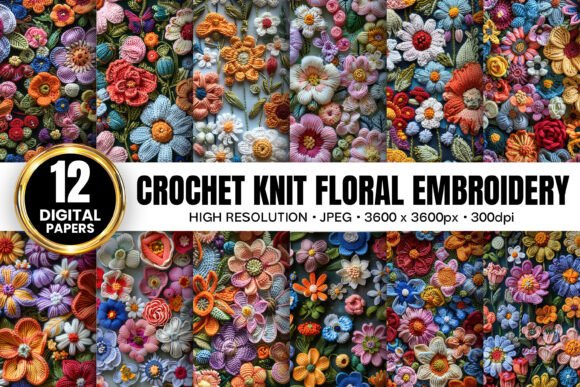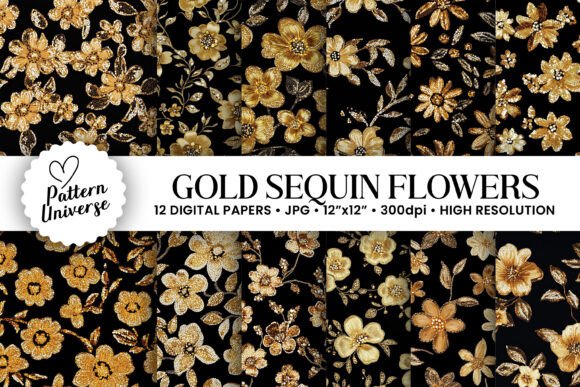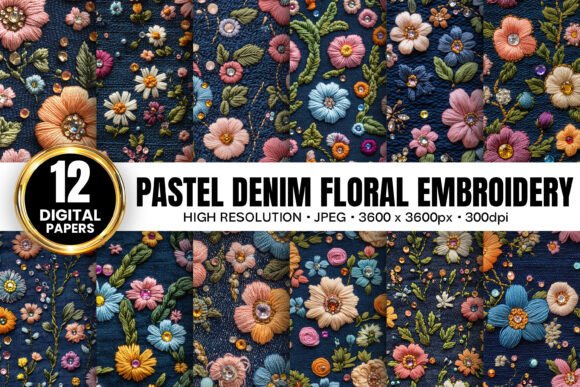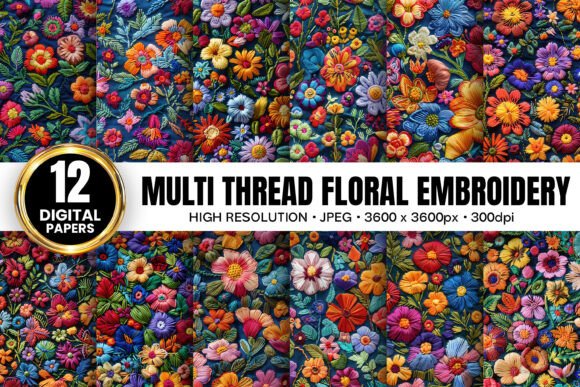
The Art of Unique Floral Embroidery
First Impressions: A Quietly Confident Design Presence
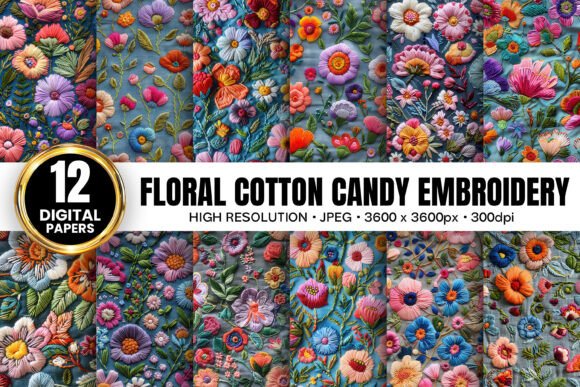
When I opened The Art of Unique Floral Embroidery, I didn’t see just another floral pattern—I saw a design with intention. It’s not overly fussy or trend-chasing, but it’s also not generic. The composition feels balanced yet organic: asymmetrical stems flow into soft, open blooms with subtle variation in petal shape and leaf placement. There’s breathing room between elements—not too sparse, not too crowded—making it immediately adaptable for both wall art and wearable embroidery. As a designer who regularly sources patterns for client projects, I appreciated how the mood lands: calm but distinctive, feminine without being saccharine, detailed without demanding perfection.
Real-World Use: From Tote Bag to Nursery Wall
Last week, I prepped The Art of Unique Floral Embroidery for a custom order: a linen tote bag for a local boutique’s spring launch. The client wanted something “handmade-feeling but refined”—no cartoon florals, no over-saturated motifs. This design delivered. Its gentle scale and naturalistic spacing translated beautifully at 4.5 inches wide, sitting cleanly on the tote’s front panel without overwhelming the fabric’s texture. Stitching was smooth—no excessive jump stitches, no abrupt direction changes that snagged thread. I used a light cutaway stabilizer, and the satin stitch petals held crisp edges even on the slightly nubby linen.
I also tested it as a baby onesie motif (scaled down to 2.75 inches) and on a cotton tea towel. In both cases, the design retained its character. On the onesie, the simplified fill-stitch leaves read clearly despite reduced size; on the towel, the open layout prevented stiffness—a common pitfall with dense floral graphics. That versatility is rare. Most floral embroidery files either collapse when scaled small or turn muddy on textured surfaces. The Art of Unique Floral Embroidery avoids both traps.
Where It Shines—and Where to Pause
This design excels in contexts where subtlety and craftsmanship are selling points: embroidered pillow covers for boutique home shops, minimalist sweatshirt embroidery for slow-fashion brands, delicate nursery decor (think framed hoop art or quilt blocks), and personalized holiday gifts like linen napkins or aprons. Its visual personality supports handmade credibility—it doesn’t scream “digital file,” which builds trust with discerning Etsy buyers and craft fair shoppers.
That said, proceed thoughtfully with certain applications. On highly stretchy knits (like lightweight jersey tees), the longer stems and thinner connecting lines may distort without precise hooping and tear-away stabilizer. On dark fabrics, verify contrast—some lighter-toned thread palettes can fade into charcoal or navy unless you adjust stitch density or add underlay. And while it works well on curved surfaces like caps, avoid placing the most intricate bloom center directly over the crown seam; distortion there can blur fine details.
Design Notes Every Embroiderer Should Check
- Test first on scrap fabric—especially if using textured weaves, terry cloth, or blends. What reads cleanly on screen doesn’t always translate to thread-on-fabric.
- Review stitch density before running full production. Some areas use denser satin stitch for petal definition; confirm it won’t pucker thin cotton or stiffen baby items.
- Confirm hoop size compatibility. While the layout is flexible, large versions may require a 6x10” hoop or larger—check your machine’s limits before committing to oversized wall pieces.
- Inspect small details at actual stitch-out size: tiny stamens, slender vine connectors, and leaf veining should remain legible, not merge into blobs.
- Mock it up in black and white—this reveals value contrast issues fast. If highlights disappear on dark backgrounds, consider adding a subtle outline or adjusting thread hue.
- Use proper stabilizer: medium-weight cutaway for stable wovens, tear-away for lightweight cottons, and fusible + tear-away combo for knits.
- Verify licensing before selling finished products or bundling The Art of Unique Floral Embroidery as part of a digital embroidery file pack—especially if marketing to other designers or small shop owners.
Why It Works for Creative Businesses
For Etsy sellers and small shop owners, The Art of Unique Floral Embroidery isn’t just a pretty graphic—it’s a quiet brand amplifier. When stitched onto a kitchen towel or apron, it signals care and curation. Customers notice the difference between mass-produced florals and something that feels considered, like this. That perception lifts perceived value: you can price higher, photograph more compellingly, and position your handmade product as intentional rather than decorative.
It also integrates smoothly into broader design assets. I’ve used it in printable mockups for client presentations, layered it over neutral apparel photography, and adapted individual blooms as standalone icons for social media branding—all because the line work and proportions hold up across formats. As a Graphics asset, it bridges physical and digital needs without feeling like a compromise.
A Final Thought for Makers
What makes The Art of Unique Floral Embroidery stand out isn’t novelty—it’s restraint. It doesn’t try to do everything. It doesn’t cram in extra petals or fill every inch with filler stitches. Instead, it gives space for the fabric, the thread, and the maker’s hand to speak. That’s what makes it resilient across projects: tote bags, baby blankets, boutique patches, wedding guest towels, even small-batch embroidered stationery. It supports your voice instead of competing with it.
If you’re choosing embroidery designs for real-world use—not just screen previews—this one earns its place in your working library. Not because it’s flashy, but because it’s trustworthy. And in our line of work, that’s the highest compliment.