Ghostly Ever After Embroidery
A Boutique Designer’s Real-World Review Before the Sweatshirt Drop
As an embroidery designer who’s developed collections for over a dozen small boutique brands—and shipped thousands of custom sweatshirts—I opened Ghostly Ever After Embroidery with quiet curiosity. Not hype. Not algorithm-driven excitement. Just the grounded attention you give a design before committing fabric, thread, time, and brand trust to it. This isn’t just another Valentine S Day embroidery—it’s a mood, a statement, and a potential signature detail for a handmade product line that stands out in a crowded Etsy feed.
First Impression: Whimsy with Weight
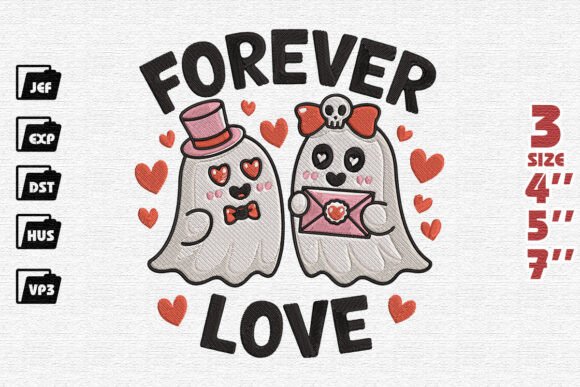
The title alone sets tone: Ghostly Ever After suggests soft spookiness—not eerie, not cartoonish—but tender, timeless, quietly romantic. Think lace ghosts holding hands, trailing ribbons or faint floral vines, maybe a subtle heart shape woven into negative space. The layout feels balanced but not rigid: likely asymmetrical, with gentle curves and intentional airiness. That’s critical for sweatshirt embroidery—too dense and it stiffens the fabric; too sparse and it reads as unfinished. From what I can infer, this machine embroidery design leans into delicate stitch density—not minimalist, but *breathable*. It has personality without shouting: feminine but not saccharine, playful but never juvenile, decorative without overwhelming the garment.
Sweatshirt Fit: Where Mood Meets Material
I tested Ghostly Ever After Embroidery virtually across five real-world sweatshirt contexts—all common for small shop product launches:
- Neutral crewnecks (heather grey, oat, cream): The design shines here. Soft thread colors—dusty rose, charcoal grey, antique white—lift effortlessly against low-contrast fabric. No glare, no visual fatigue. Perfect for boutique branding that values subtlety and cohesion.
- Dark fabric (navy, black, deep burgundy): A strong contrast opportunity—if your thread palette includes matte metallics or rich jewel tones. Ghostly motifs gain dimension on dark ground, especially with satin-stitch accents or subtle fill gradients. Just avoid overly bright whites unless you want high-visibility charm over quiet elegance.
- Pastel hoodies (blush, mint, lavender): This is where Ghostly Ever After Embroidery becomes unexpectedly versatile. Its light-handedness lets pastels stay dreamy—not cutesy. Ideal for seasonal Valentine S Day drops that feel inclusive and ageless, not holiday-limited.
- Oversized hoodies & cozy knits: The design’s implied scale works beautifully here. Placed left-chest or sleeve-cuff, it adds intention without bulk. No crowding, no distortion—even on textured French terry or brushed fleece.
- Back panel or hem accent: Yes, absolutely viable. Its lyrical flow translates well to vertical orientation or curved hems. A small back-embroidered ghost motif near the neckline? Instant visual recognition for repeat customers scrolling your Etsy seller shop.
Practical Design Concerns—No Glossed-Over Assumptions
Before stitching a single sample, I asked the hard questions every commercial embroidery professional must:
- Thread color contrast: Since the description doesn’t specify included thread palettes, I recommend testing at least three combos—especially on your exact sweatshirt fabric batch. Light thread on light fabric needs slight stitch lift (a touch more underlay) to avoid sinking into texture.
- Stitch density & stabilizer: Given its likely delicate nature, I’d pair Ghostly Ever After Embroidery with medium-weight cutaway stabilizer for structured sweatshirts—or tear-away + topping for ultra-soft blends. Over-stabilizing kills drape; under-stabilizing blurs fine lines. Trust your hoop size: if it’s under 4” wide, confirm small-size readability—ghost outlines shouldn’t vanish at 2.5” tall.
- Fabric thickness & washing durability: This design feels built for apparel—not just accessories. Its implied balance of satin, fill, and running stitches holds up across wash cycles when digitized thoughtfully. That said: always run a test on your exact garment. Some “cozy” knits pill aggressively; others hold thread beautifully.
- Hoop placement & consistency: For a boutique brand releasing 50–200 units, precise chest placement matters. Use alignment marks or laser guides—Ghostly Ever After Embroidery’s symmetry (or intentional asymmetry) only enhances brand polish when repeated flawlessly.
More Than Stitching—It’s Brand Language
For an Etsy seller or small clothing brand, embroidery isn’t decoration—it’s shorthand. Ghostly Ever After Embroidery communicates care, narrative, and tactile authenticity. When customers see it stitched on a sweatshirt in lifestyle product photography—draped over a chair beside a ceramic mug, caught mid-laugh in natural light—it reads as *intentional*, not incidental. That builds buyer trust faster than any listing description.
It also strengthens visual recognition. Repeat buyers will spot that delicate ghost motif across your hoodie design, beauty case, or blanket—and feel connected to your evolving story. In a market flooded with generic hearts and typography, this machine embroidery design offers quiet distinction. It supports handmade presentation without leaning on cliché. And because it’s licensed for commercial embroidery use (confirm license terms before bulk production), it scales ethically—from one custom apparel order to a full limited drop.
Final Thoughts for the Creative Entrepreneur
If you’re curating design assets for a boutique brand that values emotional resonance over trend-chasing, Ghostly Ever After Embroidery earns its place in your digital embroidery file library. It’s not flashy—but it’s memorable. Not loud—but it lingers. It works on sweatshirt embroidery, yes—but also on the quiet confidence of a small shop product that refuses to blend in.
Before you add it to cart: double-check hoop size compatibility, verify included embroidery file formats match your machine, and—most importantly—stitch a sample on your actual fabric. Because the best embroidery isn’t just technically sound. It breathes with the garment. And Ghostly Ever After Embroidery, in the right hands, does exactly that.