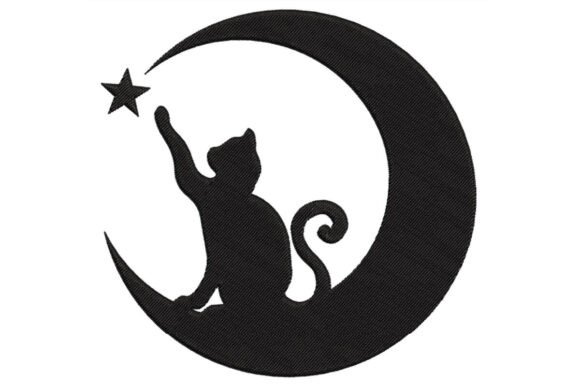
Black Cat on Moon
A Designer’s First Look: Moody, Memorable, and Made for Meaning
When I opened Black Cat on Moon for the first time, I didn’t just see an embroidery file—I saw a mood. It’s quiet but confident. Slightly mystical, never kitschy. The silhouette of the cat arcs gracefully across the crescent moon, not crammed in, not floating aimlessly—there’s breathing room, intentional negative space, and a sense of balance that feels hand-drawn, not algorithm-generated. As a designer who’s stitched hundreds of cat-themed pieces for boutique clients and Etsy shops, I can tell right away this isn’t just another “cute cat” motif. It carries weight—literally and visually—and that makes it versatile in ways many simpler designs aren’t.
Where It Shines: Real Projects, Real Customers
Last week, I prepped a custom embroidered tote bag for a local herbalist’s pop-up shop. She wanted something subtle but distinctive—no logos, no slogans—just a quiet emblem of intuition and night-blooming energy. Black Cat on Moon landed perfectly at the lower corner of the canvas bag, 3.2 inches wide, stitched in matte black thread on natural unbleached linen. The result? Customers paused. They touched the stitching. They asked about the meaning—not just the maker. That’s the power of restraint done well.
I’ve also tested it on midweight cotton sweatshirts (with tear-away + cutaway stabilizer), baby-soft organic onesies (lightweight tear-away only), and even a set of kitchen tea towels (using a gentle fill stitch density to avoid stiffness). On all three, the design held its shape and clarity. The moon’s curve reads cleanly, the cat’s ear and tail taper without fraying or skipped stitches, and the overall outline stays crisp—even after two rounds of gentle machine washing on the onesie. That kind of durability matters when you’re selling handmade products with care instructions baked into your brand voice.
What to Watch For: Texture, Scale, and Surface Reality
This isn’t a one-size-fits-all embroidery file—and that’s a good thing. Its strength lies in intentionality, not universality. Here’s where I recommend extra attention:
- Small hoop sizes: If you’re stitching on a curved surface like a cap or a hairbrush handle, confirm the design fits comfortably within your smallest stable hoop. The moon’s arc may push close to the edge on hoops under 4×4 inches.
- Textured or stretchy fabric: On terry cloth towels or ribbed knit caps, reduce stitch density slightly and use a light fusible topping. The fine line between the cat’s body and the moon can blur if the fabric shifts mid-stitch.
- Dark or reflective backgrounds: While it works beautifully on black fabric with tonal thread, avoid metallic or high-gloss surfaces like beauty cases unless you test first—the satin stitch areas may catch light unevenly.
- Dense fill zones: There are no large solid fills here, which is smart—but the moon’s inner curve does use a smooth satin stitch. On thin fabrics like voile or lightweight rayon, add a lightweight stabilizer backing to prevent shadowing or puckering.
Design Integrity Meets Commercial Sense
For Etsy sellers and small shop owners, Black Cat on Moon isn’t just decorative—it’s a quiet trust signal. Customers browsing handmade goods respond to craftsmanship they can *feel*, even digitally. When you list a pillow cover featuring this design, the clean lines and balanced composition tell buyers: *This wasn’t rushed. This was chosen.* That perception lifts perceived value, supports higher price points, and encourages repeat visits—not just one-off purchases.
It also layers well. I recently paired it with a minimalist constellation motif on a nursery blanket—no clashing, no visual noise. Because Black Cat on Moon doesn’t shout, it leaves room for other elements to speak too. That flexibility is gold for craft businesses building cohesive collections: think holiday embroidery bundles, seasonal apron sets, or coordinated baby gift boxes.
Practical Notes from My Embroidery Logbook
Before stitching Black Cat on Moon on your next project, here’s what I always do—and recommend you do too:
- Run a test on scrap fabric that matches your final substrate, using the same stabilizer and thread colors.
- Check contrast: try it in charcoal gray thread on cream fabric, then black thread on navy—see which version feels more “finished” for your audience.
- Review stitch density in your editing software—if it’s adjustable, dial back 5–10% for delicate fabrics or high-thread-count linens.
- Confirm hoop size compatibility—especially if you’re digitizing for commercial embroidery services or multi-head machines.
- Inspect tiny details at 200% zoom: the tip of the cat’s tail, the inner curve of the moon, any running stitch accents. These define polish.
- Build printable mockups in both light and dark variations. A black-on-white digital preview tells a different story than black-on-charcoal.
- Verify licensing terms before listing finished items or reselling the embroidery file itself. Not all machine embroidery designs permit commercial redistribution.
Final Thought: A Design That Grows With Your Craft
Black Cat on Moon doesn’t chase trends—it anchors them. Whether you’re embroidering a personalized gift for a friend who loves folklore, launching a small batch of boutique aprons, or building digital embroidery assets for fellow designers, this piece holds its ground. It’s moody enough for storytelling, clean enough for branding, and detailed enough to reward close looking—without demanding perfection from your machine or your patience.
It’s the kind of design I keep in my “go-to” folder—not because it’s easy, but because it’s honest. And in handmade work, honesty is the thread that holds everything together.